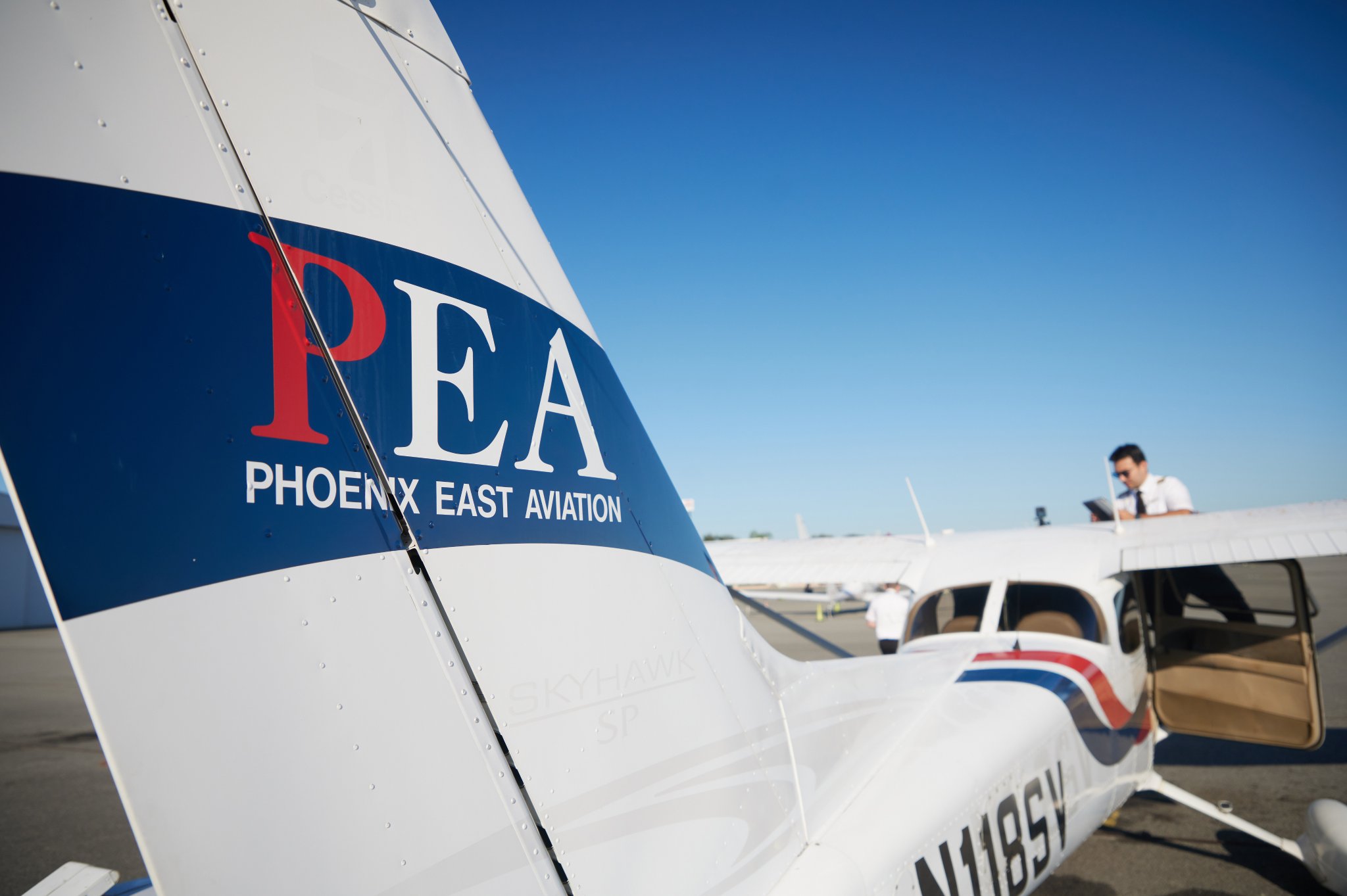
Accelerated Pilot Training: Do You Have What it Takes?
It might surprise you to learn that the actual act of flying an airplane isn’t terribly difficult. It doesn’t take superhero strength or an exceptional intellect. But getting through an accelerated pilot program like PEA’s pilot training program can be daunting. Are you up for it?
Successful pilots tend to have certain characteristics in common – a combination of traits known as “the right stuff” in the aviation world. Here are a few of them:
Good Study Habits and Ability to Learn:
To get through an accelerated flight program, the only thing you really need is the ability to learn. That’s it. Most pilots find that even the core concepts involved in flight training aren’t that difficult to learn if they apply a little effort studying. An accelerated program can be challenging because there isn’t much time in between lessons to absorb the material, making it imperative to be able to study quickly and intently.
Ability to Manage Stress
Everyone reacts to stress differently, but a good pilot has the ability to successfully manage stressful events without it having an impact on his flying performance. If a stressful event happens during flight, a pilot needs to be able to remain calm, make sound decisions and continue to fly the airplane to a safe landing.
Sensible Judgment
Good judgment and decision-making skills are possibly the most important things a pilot can have. Your instructor will not only evaluate your actual skill as a pilot, but will evaluate your ability to make decisions, such as taking off in marginal weather conditions or managing unruly passengers. You’ll also need to demonstrate sound judgment with your own personal limitations and make good decisions when presented with emergency situations in the airplane.
Respect for Safety
In aviation, it’s always best to err on the side of caution. If you respect the airplane and its limitations, you’ll be just fine. Students get into trouble with macho behavior, assuming that the rules don’t apply to them, or by complete disregard for safety. Student pilots that succeed recognize the value in rules and regulations and always make decisions with safety in mind.
Detail-Oriented
Precision and attention to detail are definitely traits that most pilots encompass. The more precise you are, the better you’ll be at flying. And while it’s entirely possible to make it through pilot training even if you’re sloppy, carelessness will lead to mistakes and mistakes have consequences. At the very least, you’ll be known as a sloppy pilot among your peers. Details are important in becoming a pilot.
As you can see, learning how to fly the airplane isn’t the most difficult part of pilot training program. The cockpit controls and the book knowledge can be learned with ease by most people; stress management, judgment and leadership skills are more difficult to teach.
What do you think? Do you have the “right stuff?”